Sunday, 6 October 2013

Divide & Exploit. The Tories tactic to attack the vulnerable

Divide and Exploit


The Tories have often employed the tactic of “Divide & Exploit” since 2010. This isn't a new tactic, far from it.  This tactic is very similar to the divide & conquer that has been used for many, many years to control people.

Divide

·         The Government looks for sections of society that would be susceptible to this attack.

·         Once section of society is identified, the Government uses their friends in the media to highlight specific   outlandish cases which is then used to generalise the whole of that section of society

       Using a convenient excuse (savings, cost,efficiency), the Government withdraws/cuts funding to services that support that section ofsociety.

·         Any and all criticism is ignored or ridiculed.


At this stage, the section of society is isolated, under attack from the mainstream media and Government while struggling as essential services have been removed.


Protests after Leeds care homes and day centres closure plans are approved.

Exploit

Now that the propaganda has seeped into the people’s psyche the Government can overtly attack that section of society.
·         Direct financial support is removed or rationed.
·         Indirect support is reduced, removed or rationed.
·         Government lies and blocks any investigation into the impact of their policies has on that section of society
·         Scapegoating society’s ills onto the section of society that is isolated.


DPAC occupied the BBC yet received no media attention.


An ideal example of this tactic would be the Government’s treatment of the disabled.  The Governments friends in the media pumped out stories showing ‘benefit cheats’ and heavily implied that this fraudulent activity is prominent within the disability community.  At the same time funding was removed from carers’ centres and other services, leaving disabled people feeling under attack and isolated.

But the Government never expected what came next.  Instead of being isolated and under attack, the disabled community got together to protect their own and fought back.  DPAC, Black Triangle, Glasgow against Atos, community group led by disabled people, fighting for disabled people.

I think that we can all take inspiration from the disabled community and how they fought back against the dive and exploit tactic by the Tories.

Saturday, 5 October 2013

Petition to have a street renamed after Mary Barbour in the village of her birth, Kilbarchan

***Click Here to Sign The Petition***
Mary Barbour: Kilbarchan's Greatest Daughter.
Political activist Mary Barbour (née Rough) was born 22nd February, 1875 in Kilbarchan, Renfrewshire, Scotland.

She is noted as a 'Red Clydesider' and one the leaders of 'Mrs. Barbour's Army' who through rent strikes fought against rent increases in 1915.

Mary was the first female Labour Councillor on Glasgow Town Council and as well as being the first woman Bailie on Glasgow Corporation she was also appointed one of Glasgow's first women Magistrates.

But in the village of her birth, Kilbarchan, there is no lasting reminder of Mary Barbour. I believe that there should be. I would prefer a monument in her memory but appreciate that times are hard.  Renaming a street in her memory was provide a lasting reminder to this great woman.

Democracy...Pfft its just a sham!

Alright Jim,

I read with interest your recent posts where you express frustration with the present democratic structures and processes within the UK.  It is a view which I wholeheartedly agree with.

Democratic System


Our current representative democracy is a sham.  It is an affront to each and every person who has voted.  We have a system whereby our elected representatives represent their political party and not their actual voters.  A representatives may enter into politics with the sincere intention to represent the electorate but once elected they are cajoled, bullied and blackmailed by party while to represent the party.

So, if MPs represent their Political Party, who represents us?

Party Politics is failing us

The party political system that we use is in desperate need of real reform. It is simply no longer fit for service.  The voting system, First by The Post, promotes this partisan types of politics but even if we had a more proportional voting system there are more fundamental problems.

In the olden days we had a three party system of the Conservatives, the Liberals and Labour.

·         Conservatives represent the ‘elite’ and wish to persevere the status quo.
·         Liberals represent the ‘middle classes’, wish to persevere the status quo but has a social conscience.
·         Labour represent the Labour movement, and wish to change the system and had a social conscience.

Which one represents you?
The decline of the Liberals in the last century has fundamentally changed British politics.  The Conservatives still represent the ‘elite’, nothing has changed there. But Labour has evolved from representing the Labour movement to attempting and failing to appeal to former traditional Liberal voters and the Labour movement.  This ethos of ‘being all things to all people’ has, in fact, alienated traditional Liberal and Labour voters.

We are now in a situation where there is no political party that is representing the labour movement at Westminster and for people like us, this is dangerous.

It seems to me that the labour movement has two choices: Stick with the Labour Party and change it from within or create another party that will represent the labour movement’s views at Westminster.


City of London
The City of London.
I was reading in a newspaper that the City of London has more ‘fiscal levers’ that the Treasury and my initial reactions what, ‘Yes! That is GOOD!!’.  But I did a wee bit more research and found out that business in the City of London get a vote in local elections.  I couldn’t believe that…but it gets worse.


In the City of London, businesses have MORE votes that the electorate.  This means, in effect, that these business have more ‘fiscal levers’ that democratic government that is elected.

How dare they! The economy of the UK belongs to the people of this country. And not businesses that care only for profit!  DO you think that these business will put the needs of the country before their want for more profit?


The Solution

It is ok to have a moan about politics but what can we do differently?  How can we improve it?

I believe that we should examine every aspect of our democratic processes and structures and if they are found wanting, then we should reform them.

Couple of solutions from the top of my head:

A constituency contract between the electorate and the MP, whereby the electorate can recall MPs who are not up to scratch. 
Reform of the voting system so that it is proportional representative.
Bring all fiscal tools back into the democratic system
Democratise our money supply
Create a mechanism so that the general public can force a general election.
Have full transparency on all aspects of our democracy, esp for lobbying and corruption.


But ultimately, this must come from us.  Politicians will not change anything unless there is pressure on them. We have a responsibility to stand up for our beliefs.

Take Care Bud

Alan


 ***a few days ago I PM'd Jim Buntin on my mobile phone and it didn't sent.  This is an expanded version of the PM that I tried to send***


Debt and the money in your pocket

Can you do me a favour?

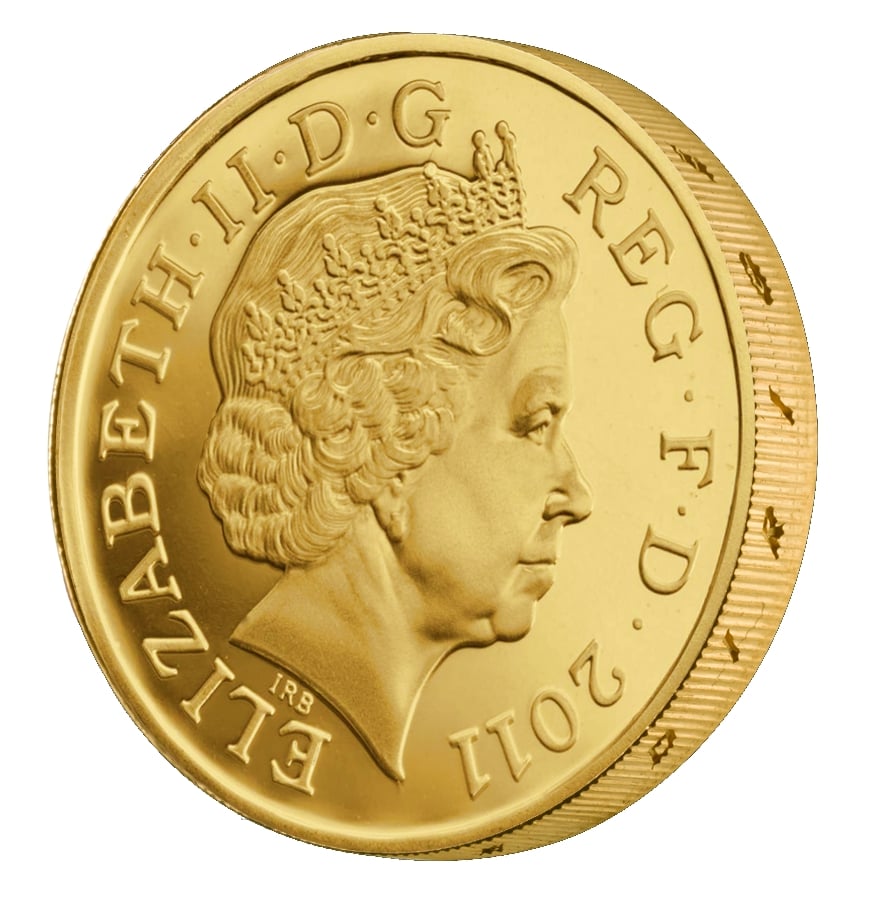
Take a £1 coin and hold it in your hand.
97% of all our currency is made via debt
which has serious ramifications for our economy.

Did you know that 97p of that £1 was created by debt?

We have two mechanisms for creating money. One good and one bad.

GOOD

  • ·         The Bank of England mints new coins and notes
  • ·         These new notes and coins are then sold to other banks for a small profit.
  • ·         The profit is returned to the Treasury
  • ·         The Banks the distribute the cash
  • ·         Only 3% of our money is create in this way.

BAD
Privately-owned banks have been given the ability to create digitial money. Sounds a bit complicated? I’ll explain


  • ·         Family X wish to buy a house for £200k
  • ·         They successfully apply at a privately-owned bank for a £200k mortgage.
  • ·         The privately-owned bank creates £200k and credits into Family X’s bank account.
  • ·         The privately-owned bank also creates £200k in debts that Family X now owes them.
  • ·         To make a profit, the Privately-owned bank then puts interest on the debt which Family X will have to pay in full.


This process is called Fractional Reserve Banking and this process has some very bad effects on our economy and campaigners claim that it is this that was the core reason for the credit crunch.

·         Money creation by the banks creates an artificial boom
·         Eventually the debt becomes too much and the boom turns into bust


I highly recommned watching this documentary and/or visit this website: http://www.positivemoney.org

Friday, 4 October 2013

Governments, NOT tenants, are responsible for the Housing Crisis.


When the Tories speak about the bedroom tax, they often claim that it is fair.  I vehemently disagree with this. The Bedroom Tax, originally offically called the under-occupancy penalty, penalises tenants for a housing shortage that they have no control over. THAT is not fair, it is scapegoating.


The housing crisis is the responsibility of Governments not tenants.  From the mid 70s onwards, Governments moved away from subsidising building affordable homes. Due to this, less new affordable homes were build and construction of homes within the private sector took priority.  Thatcher's 'rent to buy' scheme took even more housing stock away from the social sector.  For nearly three decades governments have ignored housing experts and instead implemented short-term housing policies which did not solve the core problem: The lack of affordable housing stock held by Registered Social Landlords(RSL).

Barker_HousingCompletions
The core reason why the housing benefit bill is continuously rising is due to the lack of social housing in the public sector and rising rents in the private sector. As there is a lack of social housing, tenant need to move to the private sector where rents are higher. 
The solution to our housing shortage is not rocket science, it really is simple.  Build more affordable and suitably sized homes. We should embark on a home-building project that compares to Atlee’s post war program to  ensure that we have a flexible and modern housing system that is fit for purpose. And it makes economic sense also.  For ever £1 invested in construction of new homes, £2.09 is generated within that local economy.

 We need to regeneration schemes and estates so that homes are fit for purpose. Invest in our community so that it can flourish.

  We should concentrate on Capital projects,  new homes and infrastructure to build our way out of the economic mess we face.  A by-product of this would be house prices falling as the supply of new homes rise.
Social Housing is not just an asset in a balance sheet. It is people’s homes and it give security to some of the most vulnerable in our country. We should be proud of social housing and the safeguards that it gives vulnerable people and protect it from the Tories vicious assaults!

John MacLean: Scottish Worker, Scottish Socialist, Scottish Hero.


931430_10201093832890309_1208028595_n
Daniel and Anne MacLean were both born in the Scottish Highlands.  They were victims of the Highland Clearances and the famine that followed.  At aged just 9, Anne walked from just outside Fort William to Renfrewshire without being able to speak a word of English.
After they married, the Maclean Family settle in Pollokshaws (which was then a small town within Renfrewshire). Sitting on his father’s lap, a young John McLean learned about the facts of the Highland Clearance.
Sadly John’s father, a potter by trade, died from silicosis (‘potter’s lung’) while their children were young.  This threw the family into poverty but Anne was insistent the John MacLean should receive a full education.
Due to Mrs MacLean’s perseverance, John MacLean studied at Pollok Academy then Queen’s Park Secondary.  He then enrolled at the University of Glasgow and received a Master of Arts In 1904.
It was while studying to be a teacher that John MacLean joined the Pollokshaws Progressive Union where they debated philosophy, literature and politics. Maclean joined the Scottish Democratic Federation (SDR), which was the first Marxist organisation in the UK.  He toured working-class industrial towns and cities spreading Marxist economics at public meetings and outside factory gates.
John MacLean was convinced that the standard of living for the working class could only be achieved through a social revolution.
MacLean was a fierce opponent of war.  He became increasingly disenchanted of the SDR due to the Federation’s pro-war stance in leadership and policy.
This disenchantment led John MacLean into the newly formed British Socialist Party in 1911. 
MacLean viewed the prospective war as being imperialistic in nature which would divide the working classes.  By 1911 John MacLean was an anti-war, anti-conscription activist and set out to spread his pacifistic views.
John MacLean again toured Scotland, telling workers that if they wanted to fight a Hun that they should fight the English King. 
In October 1915, MacLean was charged under the Defence of the Realm Act for ‘uttering remarks calculated to prejudice recruitment’.  He was found guilty, but as he refused to pay the £5 fine, he was sentenced to five days imprisonment.  This conviction resulted in MacLean being removed from his post as a teacher by Govan Board of Education.
MacLean became a full-time Marxist educator and founded the Scottish Labour College, which held classes in town and cities in Scotland.

John MacLean held open-air public meetings condemning the on-going war and conscription.  It was as a result of one of these meeting in January 1916 that MacLean was found guilty of six charges of sedition and, on the 11th April, was sentence to six years imprisonment.
His supporters in Glasgow campaigned for MacLean’s freedom and after agitation, John MacLean was released after 14 months and 22 days imprisonment.
In 1917 the Bolsheviks came to power In Russia.  Due to MacLean’s opposition to the war and his vocal Marxist views, he was appointed Soviet Consul in Glasgow.  The position was not recognised by the UK state and the British Authorities harassed and intimidated MacLean.
John Maclean on Soviet postage stamp
The police raided the consulate in April 1918 and John MacLean was arrested and faced 11 charges of attempting to cause mutiny, sedition and disaffection among the civilian population.
The court case was in May of that year and MacLean defended himself, delivering his famous ‘Speech from the Dock’..  He was found guilty of all charges and was sentenced to five years imprisonment.
‘I am not here as the accused, I am here as the accuser of capitalism, dripping with blood from head to foot’
Maclean delivering his famous ‘Speech from the Dock’.
Life in prison was harsh for MacLean. He went on hunger strike in May 1918 as he had fears that his food had been tampered with.  But outside the prison, MacLean’s supporters formed the Clyde Defence Committee to lead the campaign to free MacLean. They had weekly marches in Glasgow, demonstrations in London, and found support from all around Europe.
After sustained international and national pressure, the Prime Minister, Lloyd George, agreed to MacLean’s unconditional release in December 1918
MacLean was granted a Royal Pardon for his prison sentences in 1916 and 1918 but he refused this pardon saying that it was the campaigners who earned him his freedom and not the King.
MacLean was a Scottish Nationalist. He believed that a Marxist economy would work better in an independent Scotland. This led to disagreement with his comrades in Scotland and in Russia.  His stance was at odds with the British Socialist Party and the Scottish Labour Party.  Abroad, Russia believed that communism would be better served through a United Kingdom. Vladimir Lenin did not understand the nuances of British politics, so much so that he referred to MacLean as “England’s MacLean”.  MacLean’s pro-Independence stance resulted in him being ostracised by certain aspects of the Scottish political left.
By 1921 MacLean campaigned for the unemployed and formed the Tramps Trust Unlimited.  He again toured Scotland’s industrial towns and cities.  In May of that year, John MacLean encouraged miners to lead a worker’s revolution.  The authorities heard of this and MacLean was charged with sedition.  He was sent to jail for 3 months as a “political prisoner”
He again campaigned for the unemployed after his release.  In September 1921, at a meeting in Glasgow, he suggested that the unemployed should steal food rather than starve.  MacLean was charged for sedition and was sentenced to one year’s imprisonment.
He then created the Scottish Workers Republican Party, which prescribed communism within an independent Scotland. The party contested elections but faced poor election results.
John Maclean’s casket being removed from his Pollokshaws home.
John MacLean died of pneumonia on the 22 November 1923.  Harsh conditions and being force-fed in prison certainly impacted on his health.  10,000 – 20,000 people attended his funeral in Glasgow.
The story of John MacLean was then forgotten by the Scottish political left.  It was John’s daughter, Nan Milton, who spend endless hours tirelessly typing up MacLean’s works and speeches.  She set up the John MacLean Society to ensure that the spirit of John MacLean lives on in the West of Scotland. 
A new generation, using MacLean and his comrades for inspiration, carries the same red flag as John MacLean and they will ensure that John MacLean will never be forgotten.
 Excerpts from ‘Speech from the Dock”

“I had a lecture, the principal heading of which was “Thou shalt not steal; thou shalt not kill”, and I pointed out that as a consequence of the robbery that goes on in all civilised countries today, our respective countries have had to keep armies, and that inevitably our armies must clash together. On that and on other grounds, I consider capitalism the most infamous, bloody and evil system that mankind has ever witnessed. My language is regarded as extravagant language, but the events of the past four years have proved my contention….

It has been said that they cannot fathom my motive. For the full period of my active life I have been a teacher of economics to the working classes, and my contention has always been that capitalism is rotten to its foundations, and must give place to a new society. I had a lecture, the principal heading of which was “Thou shalt not steal; thou shalt not kill”, and I pointed out that as a consequence of the robbery that goes on in all civilised countries today, our respective countries have had to keep armies, and that inevitably our armies must clash together. On that and on other grounds, I consider capitalism the most infamous, bloody and evil system that mankind has ever witnessed.

I wish no harm to any human being, but I, as one man, am going to exercise my freedom of speech. No human being on the face of the earth, no government is going to take from me my right to speak, my right to protest against wrong, my right to do everything that is for the benefit of mankind. I am not here, then, as the accused; I am here as the accuser of capitalism dripping with blood from head to foot.

I have taken up unconstitutional action at this time because of the abnormal circumstances and because precedent has been given by the British government. I am a socialist, and have been fighting and will fight for an absolute reconstruction of society for the benefit of all. I am proud of my conduct. I have squared my conduct with my intellect, and if everyone had done so this war would not have taken place. I act square and clean for my principles. …. No matter what your accusations against me may be, no matter what reservations you keep at the back of your head, my appeal is to the working class. I appeal exclusively to them because they and they only can bring about the time when the whole world will be in one brotherhood, on a sound economic foundation. That, and that alone, can be the means of bringing about a re-organisation of society. That can only be obtained when the people of the world get the world, and retain the world.

“The call ‘Release John Maclean was never silent. Every week the socialist papers kept up the barrage and reminded their readers that in Germany Karl Liebknecht was already free, while in ‘democratic’ Britain John Maclean was lying in a prison cell being forcibly fed twice a day by an India rubber tube forced down his gullet or up his nose. ‘Is the Scottish Office’ asked Forward. ‘to be stained with a crime in some respects even more horrible and revolting, more callous and cruel, than that which the Governors of Ireland perpetrated on the shattered body of James Connolly?’ ”

The Paisley Martyrs of 1820


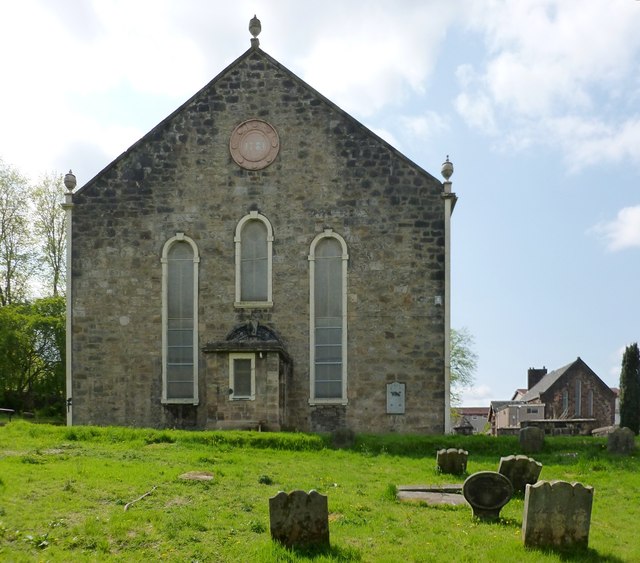
West Relief Church Paisley now Castlehead Church


Think of Paisley and you will probably think of the Paisley Pattern or the wondrous football team and league cup winners, St Mirren.  You make think of the Abbey or the fantastic view from the Car Park in the Sky.  Maybe you know Paisley quite well and you are aware of the poverty and deprivation in some schemes.  You may also be aware of the political mismanagement of the District which has allowed a once proud Town to be viewed as a suburb of Glasgow.
But scratch beneath the surface and you will see that Paisley’s vibrant and radical history seeps though each street in the Town.
In the early 19th Century, life was harsh for the average Paisley buddie.  Between 1800 and 1808 the average earnings for weavers had halved.  This continued until 1814 when local weavers successfully petitioned a local magistrate for higher earnings.  The Employees ignore the orders of the magistrate and, left with no other alternative, the weavers went on strike for nine weeks with the support of the National Committee of Scottish Union Society.
By 1816, vast swathes of working class Scots had be Radicalised by the continuing harsh conditions that were initially justified by the Napolenic war and the ‘uncaring’ and ‘unrepresentative’ Tory government which brought in laws such as the new Corn Laws, which resulted in food price remaining expensive.
It was in September 1816 that the first ever Scottish Radical public meeting took place at the West Relief Church in the area of Paisley that is now Castlehead.  Following that, over 40,000 working class Scots attended a Radical meeting in Glasgow Green demanding the end of the Corn Laws and a more representative Parliament.


Countless Radical meetings cropped up all across Great Britain, looking across the Channel towards the French Revolution for inspiration.
In 1819, eleven peaceful Radical protesters were killed by British militia in what was known as the Peterloomass massacre.
Residents of Paisley showed their support with their Mancunian brethren by holding a meeting in the south side of Paisley at Meikleriggs Moor.  After the meeting the Radicals ignored Magistrates orders by marching into Paisley.  The police tried to intervene and stop the march.  The subsequent serious rioting lasted a week.
In 1820, the Tory government in London implemented legislation that banned Radical public meeting with troops being dispatched to Paisley to resist the ‘revolutionaries’.
When news of the legislation reached Paisley, residents took up arms for political reform.  British militia found a weapons cache in Kilbarchan while there were reports of a Scottish Army marching in the streets of Glasgow.
In one incident when British militia was searching for weapons in Foxbar, a gun battle ensued between residents of Foxbar Home and those searching for weapons. Sadly a “young lad of the name of Cochran was shot through the heart” by British Militia and died.
On the 1st of April, the Committee for Forming a Provisional Government called for an immediate general strike.
By the 3rd of April over sixty thousand weavers in Scotland were on strike and the British Government had moved seven regiments into Glasgow.  There were reports of skirmishes between 300 Radicals and parts of the Calvary but no one was injured.
A band of Radicals, led by Andrew Hardy, marched from Glasgow to Carron Ironworks after being informed that there were weapons there which were ready to be collected.  At Condorrat the met up with fellow Radicals led by John Baird.  They continued their march until the 5th of April when, at Bonnymuir, they encountered British troops and a short battled ensued.  The Radicals were rounded up and arrested.
On the same day, the experienced Radical John Wilson and other Radicals marched to Strathaven.  Once there, they were identified and arrested.
On the 8th of April British militia transported prisoners from Paisley to Greenock Jail. They encountered trouble from locals but managed to transport their prisoners as planned.  On their return journey the militia were taunted by locals and retaliated by opening fire, killing an eight year old boy and injuring eleven.  Enraged, Greenock residents stormed Greenock Jail and released all the prisoners.
Eventually the uprising was quelled and a total of 88 men were charged with treason.
John Wilson was beheaded in Stirling in front of a crowd of 20,000 on the 4th August.
Andrew Hardy and John Baird were hanged then beheaded on the 8th September.
It was later revealed that British Agent Provocateur were in operation within the Radical movement, agitating the movement so that Radical Leaders could be easily identified.
The Radical Heart of Paisley still beats.  The 1820 Society ensures that the memory of John Wilson, John Baird and Andrew Hardy will never be forgotten and the hope of a fairer Scotland beats within every Paisley buddie’s heart.
The memorial at Woodside Cemetery in Paisley.